
Sewer Line Replacement in Fort Collins & Loveland
Full and partial sewer line replacement, trenchless or excavated, with permits and inspections handled.
- Camera inspection first
- Written, itemized quotes
- Serving Larimer County
Some sewer lines can be patched. Others have reached the end of their life, and every repair just buys a few months until the next backup. When the camera shows a line that is collapsing, full of roots along its length or sagging in several places, replacing it is usually the cheaper choice over the next ten years. We replace sewer lines across Fort Collins, Loveland and the surrounding towns, by trenchless methods where the line allows and by excavation where it does not.
Call (970) 999-1365 for a camera inspection and a written replacement quote.
Call nowChoose your area
Local rules on who owns the line, permits and inspections differ by town. Pick yours:
When replacement makes more sense than repair
A replacement is worth pricing when the camera shows any of these:
- Damage along most of the line, not just one spot: cracks, root intrusion at joint after joint, or heavy corrosion.
- Collapsed or crushed pipe. Once a section has caved in, nothing can be pulled through it until it is dug out.
- Fiber (Orangeburg) pipe, which was used in many mid-century homes and deforms and collapses as it ages.
- Cast iron scaling and rot that has thinned the walls and leaves rough edges for waste to catch on.
- Bellies or wrong slope that let waste sit in the line. Sags come from settling soil, and Colorado’s expansive clay makes them more likely.
- Repeat repairs. If the line has been snaked or patched several times in a few years, the next problem is rarely far behind.
About 31% of homes in Fort Collins and 34% in Loveland were built before 1980 (U.S. Census Bureau, ACS 2024 5-year estimates). Many of them still have their original clay, cast iron or fiber sewer lines, which is why replacement calls are common in established neighborhoods.
Your options
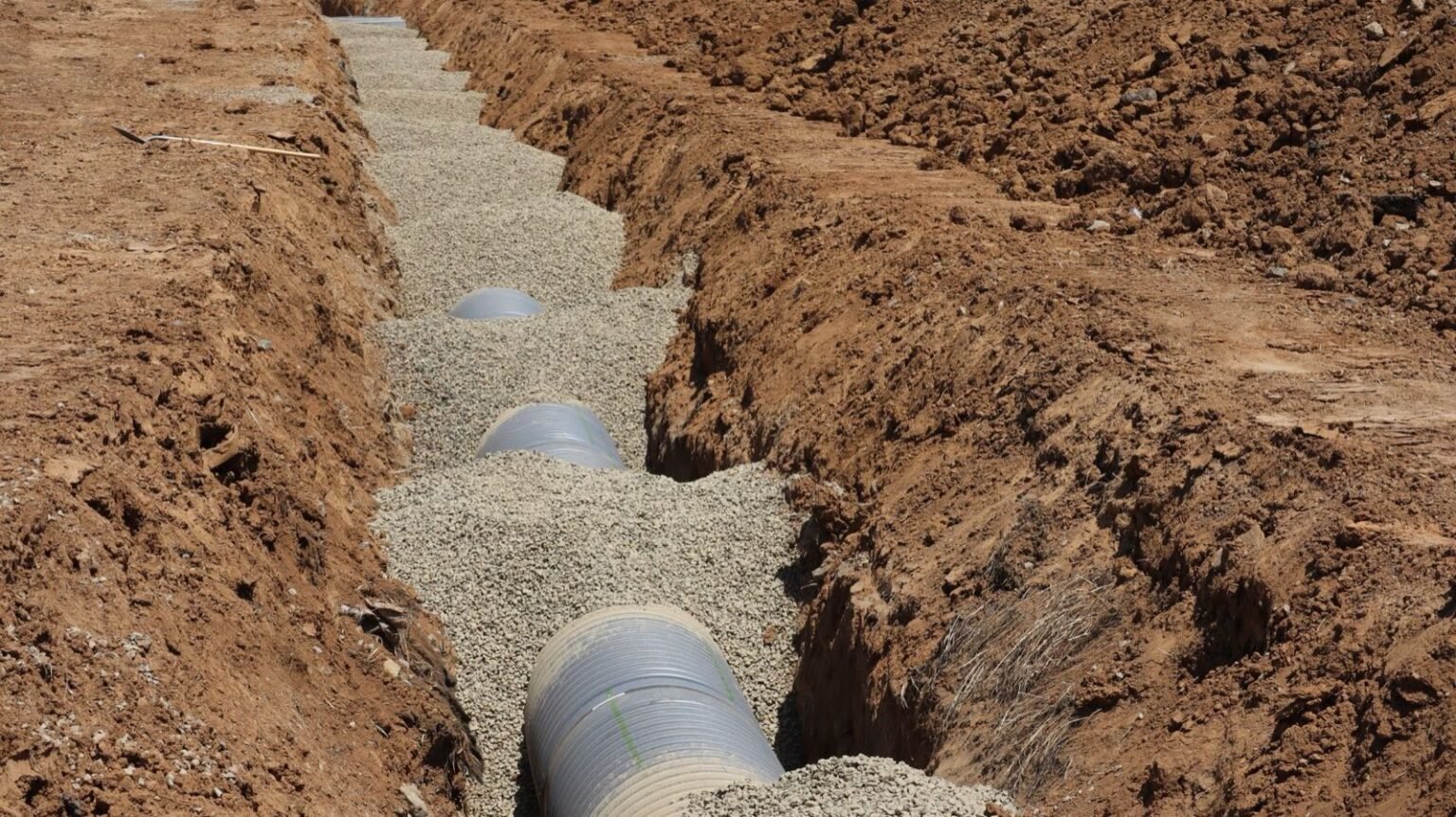
Pipe bursting. A bursting head pulls a new, seamless HDPE pipe through the old line, breaking the old pipe outward as it goes. It needs one pit near the house and one near the connection, not a trench along the whole run. Bursting is a true replacement: you end up with a brand-new pipe, the same size or slightly larger than the old one.
Pipe lining (CIPP). A resin-soaked liner is pulled through the cleaned line and cured in place, forming a new pipe inside the old one. Lining is technically a structural repair rather than a replacement, but on a line that still holds its shape it does the same job with even less digging. How trenchless repair works.
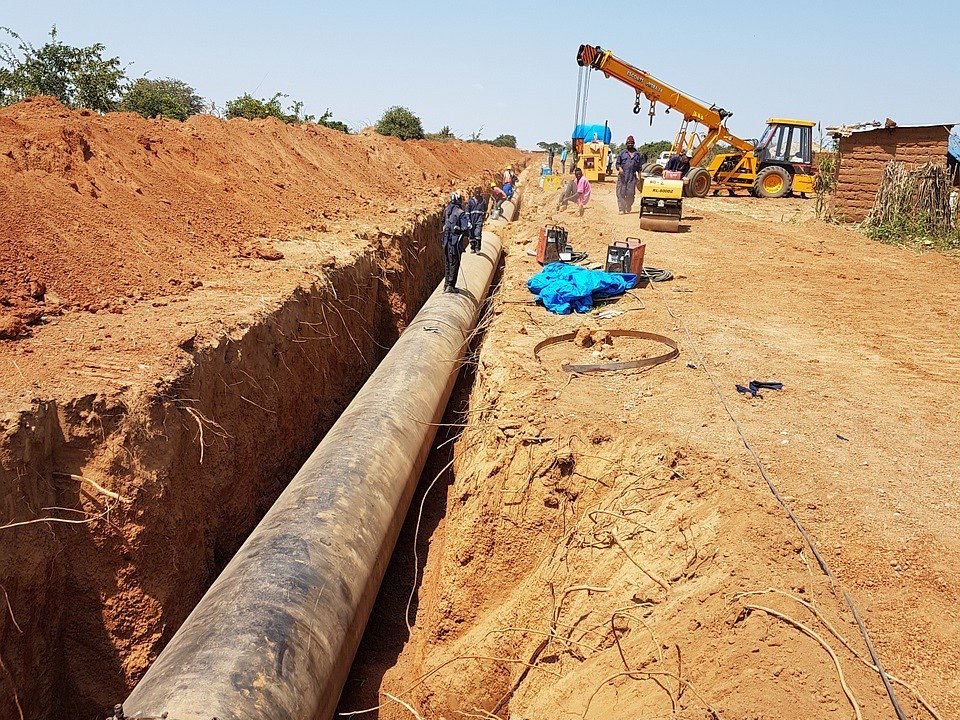
Open-trench replacement. The line is excavated and replaced with new PVC. It is the most disruptive option, and sometimes the only one that works: when the pipe has collapsed, when the slope has to be corrected, when the line needs re-routing, or when the soil conditions call for proper bedding.
Partial replacement. If the damage is limited to one stretch, such as the section under a tree or where the line meets the house, we price replacing just that section and lining or leaving the rest.
The camera decides which of these are possible on your line. Your quote shows each workable option with its price.
What sewer line replacement costs
National cost guides put an average sewer line replacement at about $3,320, with most homeowners paying between $1,390 and $5,320. Excavated replacement typically runs $50 to $200 per foot and trenchless methods $60 to $250 per foot (This Old House, 2026, based on Angi data).
What moves your price:
- Length and depth. Long runs and deep lines take more pipe, more digging and more time.
- What is on top. Lawn is inexpensive to restore. Driveways, patios, retaining walls, mature trees and sprinkler systems add cost. Work in the street adds right-of-way permits, traffic control and pavement repair.
- Method. Trenchless costs about the same or more per foot, but it can save a lot on restoration.
- Permits. In Fort Collins, a plumbing permit costs $65 plus sales tax on the project valuation. Other towns and districts set their own fees.
Permits, locates and inspections
Replacing a sewer line is permitted work. In Fort Collins, replacing concealed pipe counts as new work under a plumbing permit; clearing a stoppage or fixing a leak does not. Every dig starts with an 811 call so buried gas, power and water lines are marked. Where the line ties into the main, the city or the sanitation district usually inspects the connection. In Windsor, for example, contractors working on the sanitary sewer must notify the town. We pull the permits, request the locates and schedule the inspections.
A typical replacement, step by step
- Camera inspection and locate. We mark the line’s route and depth on the ground.
- Written quote. It lists the method, length, restoration and permit costs.
- Permits and 811 locates. Usually a few business days, depending on the town.
- Replacement day. Most bursting jobs and short open-trench replacements take one to two days; long or deep lines and street work can take longer.
- Inspection. The city or district inspects where required.
- Backfill and restoration. Trenches and pits are backfilled and compacted. Lawn, sprinkler and hardscape repairs are done as listed in your quote.
- Final video. You get a camera recording of the new line.
You will not be able to use the drains while the old line is disconnected, usually for part of a day. We tell you when to stop and when you can start again.
Insurance and financing
Homeowners insurance rarely pays to replace a line that failed from age, roots or corrosion, though it may cover sudden damage. If your policy has a sewer backup endorsement, it may help with cleanup inside the house. Ask whether financing or a payment plan is available before you sign.
Sewer line replacement FAQ
How long does a new sewer line last?
Modern PVC and HDPE pipe is designed to last for many decades, far longer than the clay, cast iron and fiber pipe it usually replaces, as long as it is bedded and sloped correctly.
Can I replace only part of my sewer line?
Yes, when the camera shows the rest of the line is sound. Partial replacement plus lining is often the most cost-effective fix for older lines with one bad stretch.
Do I need to be home during the replacement?
Someone needs to be available at the start and the end, and we need access to the cleanout or the basement. You do not need to be home the whole time.
Who is responsible for the part of the line under the street?
In Fort Collins, the property owner is responsible for the service line all the way to the city’s main in the street, including damage to the street or driveway caused by a failure on that line. Rules differ by town and district, and we confirm them before quoting.
Will replacing the line stop roots for good?
A new seamless or solvent-welded line gives roots no joints to get into, which stops root intrusion in the replaced section.

Sewer or water line trouble?
Call for a camera inspection and a written quote.
Camera inspection first, written and itemized quotes, and trenchless options where they fit.