
Sewer Pipe Lining in Fort Collins & Loveland
A new pipe formed inside the old one that seals cracks, joints and root entry without digging up the yard.
- Camera inspection first
- Written, itemized quotes
- Licensed and insured
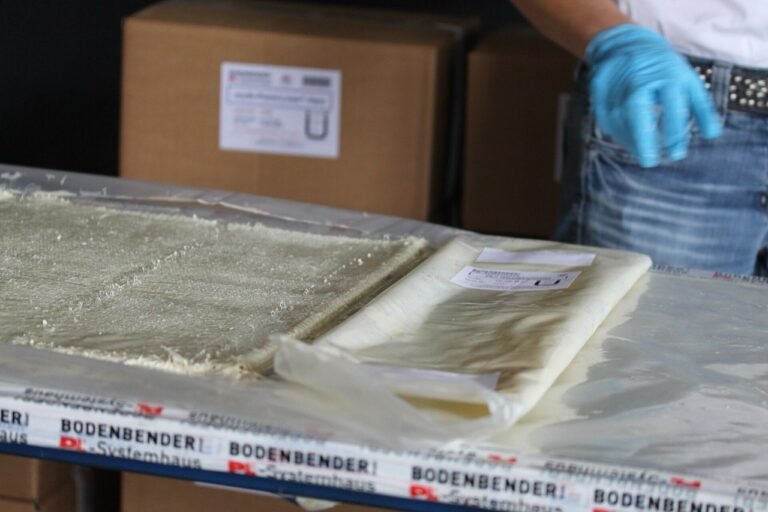
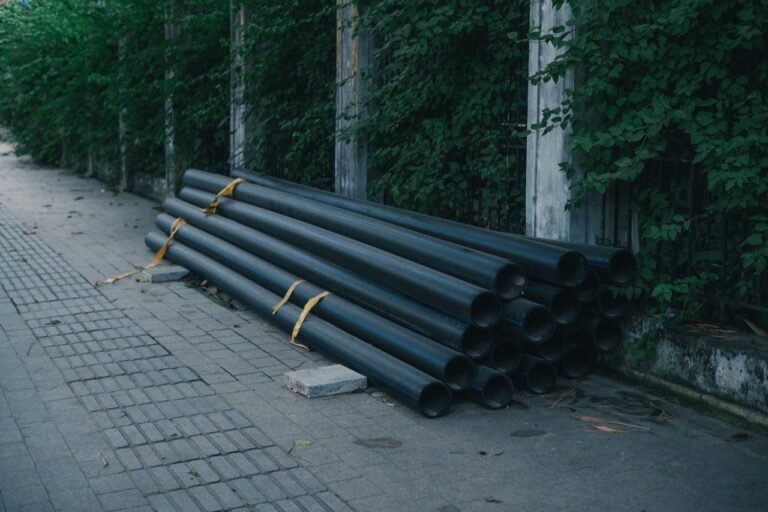
Photo: Bdnbndr2020, CC BY-SA 4.0, via Wikimedia Commons
Sewer pipe lining, also called cured-in-place pipe (CIPP) or pipe relining, builds a new pipe inside your old one. A felt liner soaked in resin is fed in through a cleanout, pressed against the old pipe walls and cured hard, sealing cracks and the joints roots grow through with little or no digging. Fort Collins Sewer Line Repair lines sewer laterals in Fort Collins and Loveland once a camera inspection confirms the old pipe still holds its shape.
Call (970) 999-1365 to find out whether your sewer line can be lined.
Call nowChoose your area
Local rules on who owns the line, permits and inspections differ by town. Pick yours:
What is cured-in-place pipe (CIPP)?
In CIPP lining, a flexible tube, usually polyester felt or fiberglass, is saturated with liquid resin on site, a step called wet-out. It goes into the cleaned sewer lateral (the building sewer from the house to the public main), is held against the old walls by air or water pressure, and cures until hard. The result is a smooth, jointless liner designed to work as a pipe in its own right, not just a coating.
The resin matters as much as the liner:
- Epoxy is the usual choice for house laterals. It bonds well, shrinks little as it cures and typically has little odor. This is what most people mean by epoxy pipe lining.
- Polyester is common in large municipal mains. It typically costs less but usually contains styrene, which smells strongly while curing.
- Vinyl ester is chosen where extra chemical or heat resistance is needed, such as harsh commercial drains.
Fully cured epoxy is hard and chemically stable. Curing resin can give off fumes, so we ventilate the work area and tell you when the cure is complete.
Why the line is cleaned first
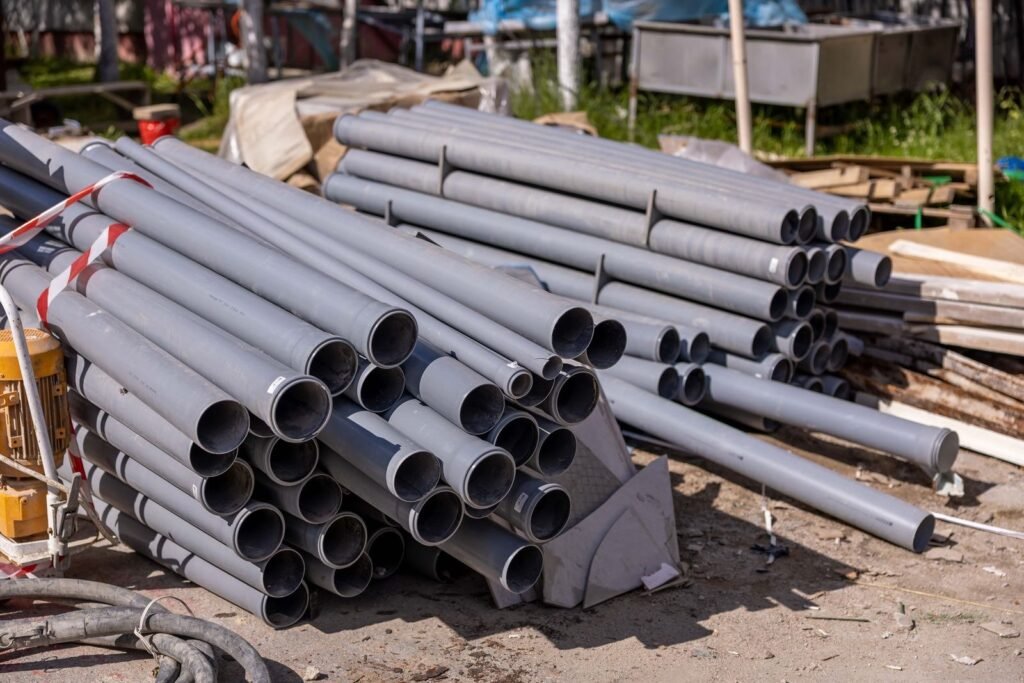
A liner is only as good as the pipe it cures against, so we clean the line back to the bare wall:
- Hydro jetting scours out grease, sludge and fine roots. See how hydro jetting works.
- Root cutting removes root masses at the joints.
- Descaling grinds scale and rust off old cast iron with rotating chain cutters, down to sound metal.
A second camera pass confirms the pipe is clean and measures it for the liner.
Rushing this step is one of the main reasons liners fail early. Roots left behind are trapped under the liner as lumps and can keep growing at its ends. Cast iron scale leaves ridges, voids and thin spots. Grease stops the resin bonding, so water can track between the liner and the old pipe. If roots are your main problem, read our guide to tree roots in sewer lines.
Inversion versus pull-in-place
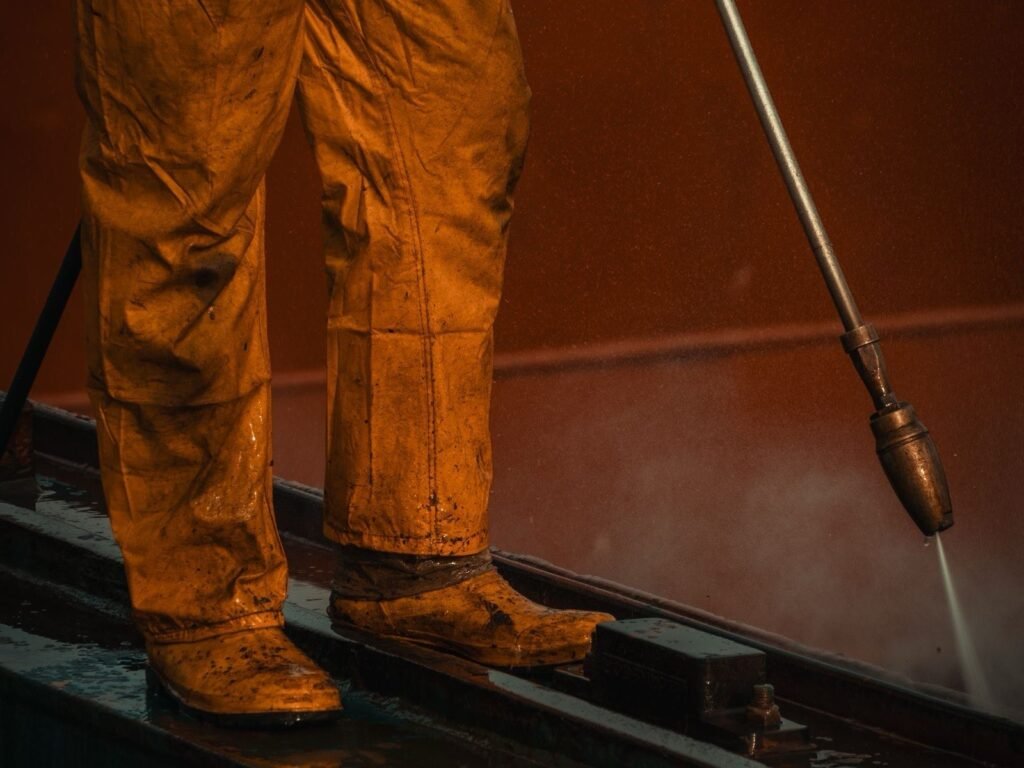
- Inversion. Air or water pressure pushes the resin-filled liner into the pipe while turning it inside out, so the resin side unrolls straight onto the old wall. Nothing drags along the pipe, so resin is not scraped off on the way in, and it can often be done from one access point and through gentle bends.
- Pull-in-place. A cable pulls the liner into position, then an inflatable bladder inside it presses it against the walls while it cures. In most systems the bladder comes out afterward. It usually needs access at both ends of the section.
The access points, bends and length of the run decide which we use.
Curing: hot water, steam or UV light
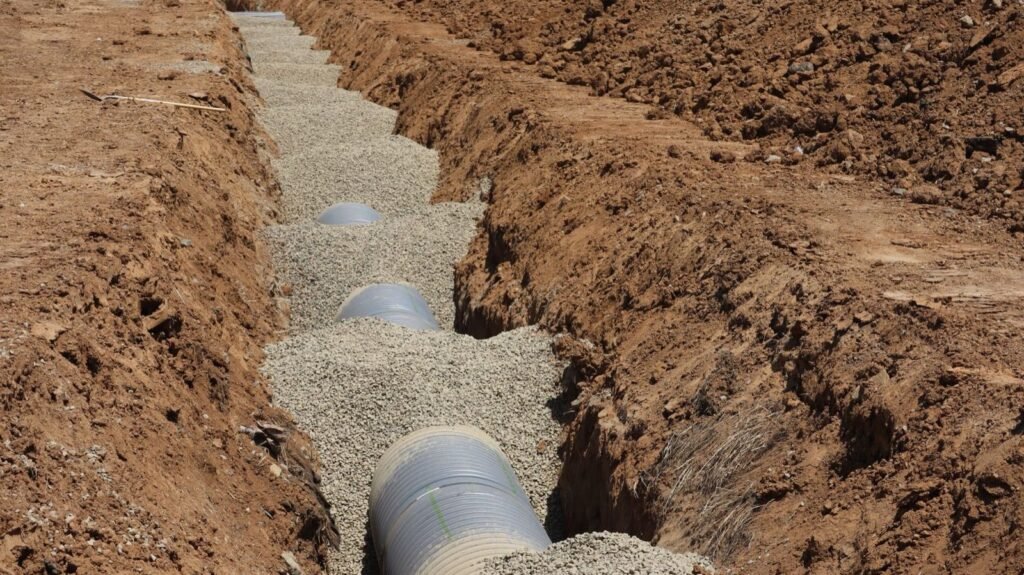
- Hot water circulated inside the liner gives even heat over long runs.
- Steam cures faster than water and uses less of it.
- UV light cures a liner built for it, usually fiberglass, as a train of lamps is pulled slowly through. It is usually the fastest.
- Ambient cure lets some epoxies harden at ground temperature. It needs no heat source but takes longest.
Faster is not automatically better. What matters is a complete cure along the whole length, so ask how the cure will be monitored.
Full-length liners or a point liner
Full-length liners run from the cleanout to the main and seal every joint on the way. They suit vitrified clay or cast iron with roots at joint after joint, or cracks along much of the run. That describes many lines in older neighborhoods: 31% of Fort Collins homes and 34% of Loveland homes were built before 1980 (U.S. Census Bureau, ACS 2024 5-year estimates).
Point liners, also called sectional or spot liners, are short sleeves placed over a single defect, such as one cracked joint or root entry point. The liner is wrapped around an inflatable packer, pushed into place while we watch on camera, then inflated and cured. It makes sense when the rest of the line is sound.
Some lines need both, or need one collapsed section dug out and replaced before the rest is lined.
Brush-coat epoxy and where it fits
Brush-coat epoxy is applied, not inserted. A spinning brush spreads layers of epoxy over the inside of the cleaned pipe, building a coating. With no liner tube, it can get through small openings, tight bends and changes in pipe size, such as cast iron drains under a slab inside the house. It needs pipe cleaned to sound metal. For a cracked lateral out in the yard, a full CIPP liner is usually the stronger choice, so ask what any coating is rated for.
Reopening connections: lateral reinstatement
When a liner runs past a branch connection, such as another drain joining underground, it covers that opening. After the cure, a robotic or remote-controlled cutter, watched on camera, cuts each connection back open from inside the pipe and smooths the edge so it will not catch waste. The same tools reopen house laterals when a city or district lines a main, which is why the step is called lateral reinstatement. Our final camera run shows every connection open.
What lining cannot fix
Lining suits pipe that is cracked, leaking or rooty but still continuous. It is the wrong tool when:
- A section has collapsed. The liner needs a pipe to form around, so a crushed spot is dug out first.
- There is a deep belly. A liner follows the sag, so water and solids keep collecting. More on sewer line bellies.
- The slope is wrong along the line.
- Joints are badly offset. A liner can bridge a small offset, but a large one leaves a step that catches waste or blocks the liner.
- Orangeburg has flattened. Deformed fiber pipe is usually replaced by pipe bursting or excavation instead.
How much does sewer pipe lining cost?
This Old House’s 2026 sewer line replacement guide, based on Angi data, puts trenchless work, which includes lining, at about $60 to $250 per foot, against about $50 to $200 per foot for excavated replacement. As an illustration only, lining a 50-foot lateral at $60 to $250 per foot comes to $3,000 to $12,500. That is not a quote, and a point liner over one defect is a far smaller job.
Other items on a lining quote:
- Cleaning. Angi puts hydro jetting at about $475 on average, with most paying $350 to $600. Heavy cast iron descaling takes longer.
- The camera inspection, about $100 to $500 in This Old House’s guide.
- Access. A home without a usable cleanout may need one added, or a small pit.
- Reinstatements for each connection that has to be reopened.
- Permits, which vary by town. In Fort Collins, replacing concealed pipe needs a plumbing permit at $65 plus sales tax on the project valuation, and we confirm what your job needs.
Lining often costs about the same per foot as digging, or more, but it can save a great deal in restoration when the line runs under a driveway, patio, mature trees or finished landscaping. Your written, itemized quote lists every item. Full sewer line cost guide.
Our sewer lining process
- Camera inspection to confirm the line can be lined and to measure its length, diameter, bends and connections.
- Written, itemized quote naming the liner, resin, curing method and any digging.
- Permits and 811 locates where the job needs them.
- Cleaning by jetting, root cutting and descaling, then a camera check.
- Wet-out and installation by inversion or pull-in-place.
- Curing with hot water, steam, UV light or ambient cure.
- Reinstatement of any connections and trimming at the cleanout.
- Final camera video of the finished liner, which you keep.
Once the line is clean, many residential lining jobs are finished in a day. Every job is done by licensed sewer technicians and covered by liability insurance. Lining is one of two methods on our trenchless sewer repair page, and our main page covers sewer line repair in Fort Collins from first call to final video. If you are looking for sewer pipe lining near you, our Fort Collins and Loveland pages cover local utility rules.
Sewer pipe lining FAQ
How long does a sewer liner last?
Cured-in-place liners are designed to last for decades. Real lifespan depends on the resin, the liner thickness, how well the pipe was cleaned and what goes down the drain, so ask for the manufacturer’s rating and get any warranty in writing.
How soon can I use water after my sewer pipe is lined?
Usually the same day once the liner has cured; we tell you when. Until then the drains stay off, so plan laundry and showers around the work.
Can a lined sewer pipe be cleaned later?
Yes, with suitable nozzles. A cured liner can be jetted, but not with aggressive cutting heads made for root-filled clay or scaled cast iron. Tell whoever cleans the line that it is lined, and keep the final video.
Does lining make my sewer pipe smaller?
Slightly, by the thickness of the liner wall. The smooth, jointless interior usually flows as well as or better than the rough old pipe, especially cast iron narrowed by scale.
Can roots grow through a pipe liner?
Roots generally cannot get through a properly installed, fully cured liner, because it has no joints along its length. The weak points are the ends and any connection left unsealed, which is why the final camera run matters.
How much does sewer pipe lining cost?
This Old House’s 2026 guide puts trenchless work, including lining, at about $60 to $250 per foot. Cleaning, access, permits and reinstatements are listed on the quote, and a point liner over one defect costs far less than a full-length liner.
Can lining fix a belly or a collapsed pipe?
No. A liner follows the shape of the old pipe, so a sag stays a sag, and a collapsed section has to be dug out first. Bursting or excavation is usually the fix.
Sewer or water line trouble?
Call to book a camera inspection and find out whether your sewer line can be lined.
Camera inspection first, written and itemized quotes, and trenchless options where they fit.

Sewer and water line repair for Fort Collins, Loveland and Larimer County. Camera inspection first, written and itemized quotes, licensed sewer technicians.
Call (970) 999-1365