
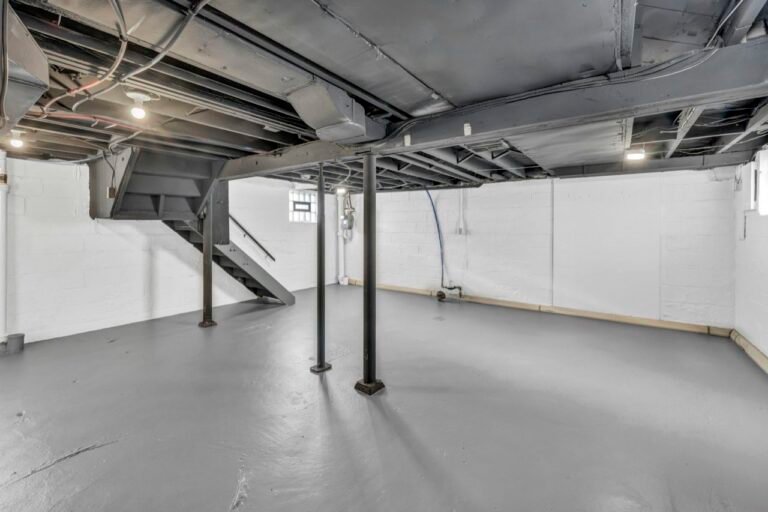
Emergency Sewer Repair in Fort Collins & Loveland
Sewage coming up through a drain? Stop using water, then call. Active backups are scheduled first.
- Camera inspection first
- Written, itemized quotes
- Licensed and insured
Emergency sewer repair is the urgent fix for a sewer line that has failed: a collapsed or broken pipe, sewage surfacing in the yard, a sinkhole over the line, or a main line that clogs again as soon as it is cleared. Fort Collins Sewer Line Repair handles emergency sewer repair in Fort Collins, Loveland and Larimer County, and active sewage backups are scheduled first. We restore flow where it is safe to, find the break with a camera, then make the permanent repair.
Call (970) 999-1365 to check availability and get a failed sewer line on our schedule.
Call nowChoose your area
Local rules on who owns the line, permits and inspections differ by town. Pick yours:
What counts as a sewer emergency?
Treat any of these as urgent:
- Sewage coming into the house, or no drain in the house will take water.
- Sewage surfacing in the yard, around the cleanout or along the line. Keep children and pets away, and do not mow over it.
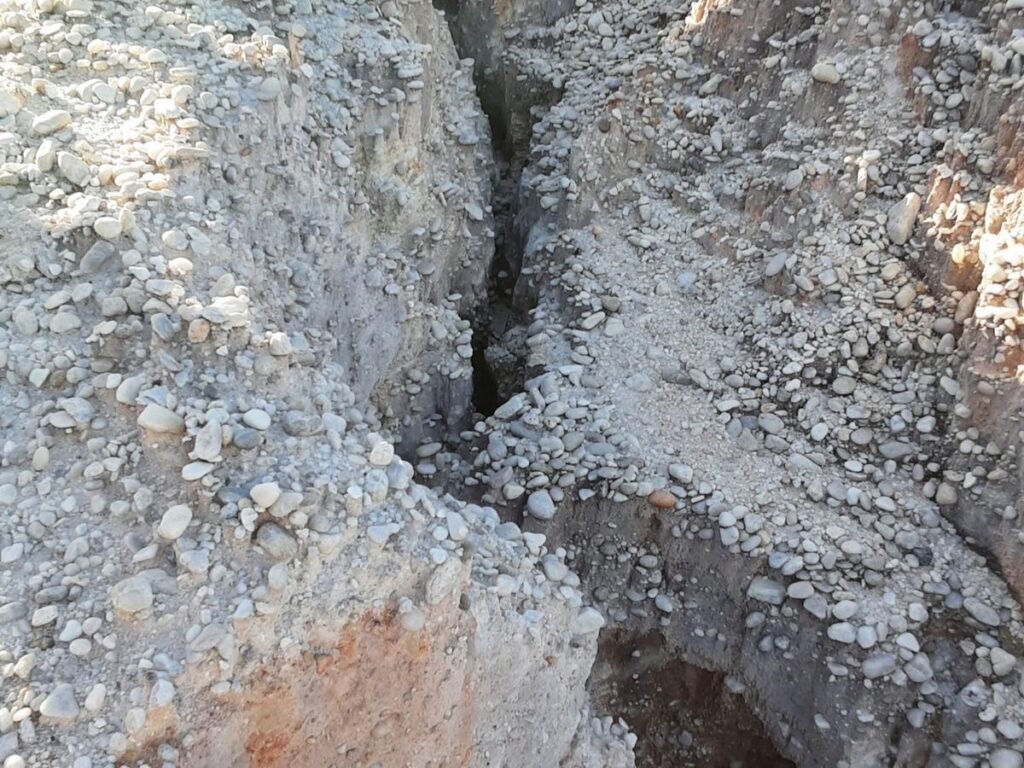
- A sinkhole or soft spot over the line. A broken pipe can wash soil away until the ground gives. Keep people, pets and vehicles off it, and report a hole in the street or sidewalk to the city.
- A line broken by digging, such as a fence post auger, a sprinkler trench or an excavator.
- A main line that clogs again right after clearing, or a cable that stops at the same spot every time. That usually means a collapse, a broken section or a badly offset joint.
- A strong sewer smell that will not clear. Sewer gas can contain hydrogen sulfide and flammable methane, so ventilate and keep flames and sparks away. A rotten-egg smell can also be natural gas. If you are not sure, leave the house and call your gas utility or 911 from outside.
What can usually wait a day
- One slow drain, usually a clog in that fixture’s trap or branch line.
- Slow but moving drains with nothing backing up. Use less water until the line is cleared.
- A faint odor from a floor drain that rarely gets used. The trap may have dried out, and pouring water into it often solves it.
What to do while you wait
Stop using water, keep people and pets away from any sewage, and stay out of flooded rooms with outlets, a furnace or a water heater. Call your utility so it can check the main; in Fort Collins, that is Fort Collins Utilities at 970-221-6700. Take photos before anything is cleaned. Our sewer backup checklist covers each step and safe cleanup.
How we handle an emergency sewer repair
- Scheduling. Tell us what is happening. Active sewage backups are scheduled first.
- Restore flow where we can. A cable machine can often open a path through a blockage or partial collapse, so the house drains while the repair is planned. We jet only when the pipe can take it.
- Find the failure with a camera. The video shows what failed and how badly: a collapse, a broken or separated joint, a crushed section, a sag or a root mass. About sewer camera inspections.
- Locate and mark it. A transmitter in the camera head marks the position and depth on the ground, so any digging is a targeted pit, not a trench.
- Make it safe in the meantime. Depending on the failure, that can mean capping an open pipe, fencing off a hole, limiting water use or a temporary bypass.
- Written quote, permits and locates. You get a written, itemized quote for the permanent fix. We pull the permits, request the 811 locates and schedule the inspection.
- Permanent repair, followed by a final camera video of the finished line.
Every job is done by licensed sewer technicians and covered by liability insurance.
Fixing a broken or collapsed sewer line
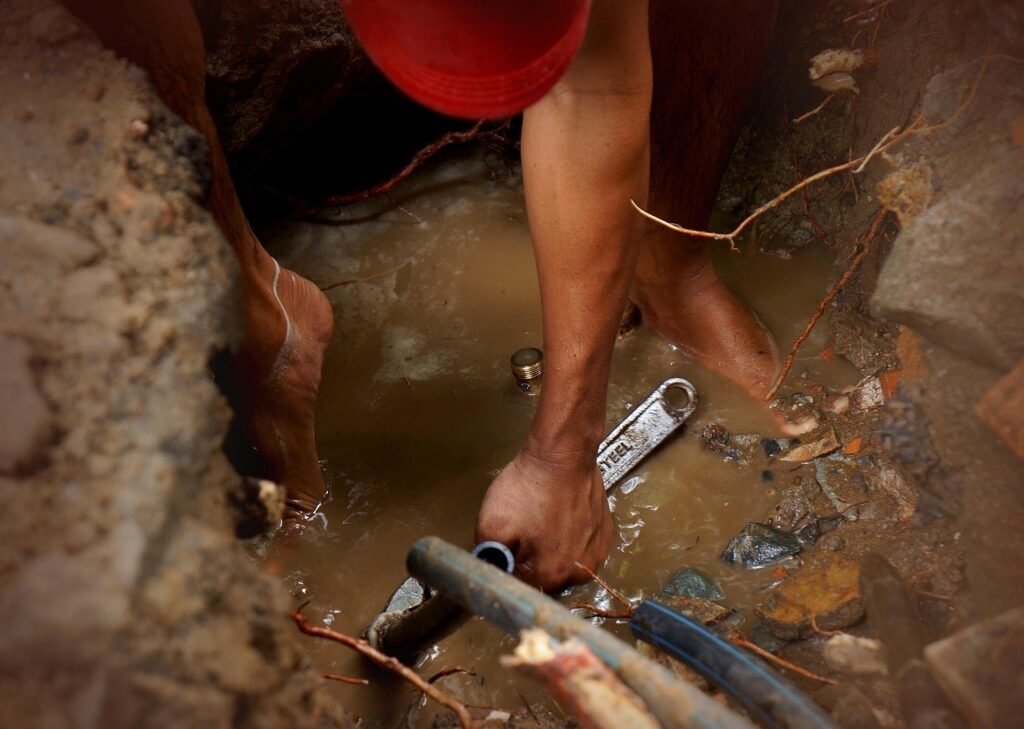
The camera decides which repairs will work:
| Repair | When it fits | Digging |
|---|---|---|
| Spot repair | One collapse, break or root-entry point in sound pipe | One pit at the damage |
| Pipe bursting | Cracked or broken pipe on a straight run, if the bursting head can pass | A pit at each end |
| Pipe lining (CIPP) | Cracked, leaking or rooty pipe that still holds its shape | Usually the cleanout or one small pit |
| Open-trench replacement | Collapse along the run, sags, wrong slope or Orangeburg | A trench along the damaged section |
A liner needs continuous pipe to cure against, so it cannot bridge a collapse or fix a sag. A repair can also combine methods: dig out the collapse, then line the rest or burst in new HDPE pipe. Read more about pipe bursting, sewer pipe lining and sewer line replacement.
For scale, This Old House’s 2026 guide (based on Angi data) puts an average sewer line replacement at $3,320, with most homeowners paying $1,390 to $5,320, excavation at $50 to $200 per foot and trenchless work at $60 to $250 per foot.
Why sewer lines break and collapse
- Orangeburg fiber pipe, commonly installed from the 1940s to the early 1970s, absorbs water, blisters and flattens into an oval until it collapses.
- Vitrified clay resists corrosion but is brittle. Roots enter at the joints, widen cracks and push sections out of line.
- Cast iron corrodes and scales from the inside. The bottom can wear through while the top still looks solid.
- PVC and ABS in newer lines rarely collapse on their own, but settling can pull joints apart or leave a belly, and fence posts and excavators break them.
Ground movement adds stress. The Colorado Geological Survey calls expansive soil Colorado’s most significant geologic hazard and lists damage to pipelines and sewer lines. About 31% of Fort Collins homes and 34% of Loveland homes were built before 1980 (U.S. Census Bureau, ACS 2024 5-year estimates), so many lines here are old enough to be clay, cast iron or Orangeburg.
Who pays when the problem is in the city main?
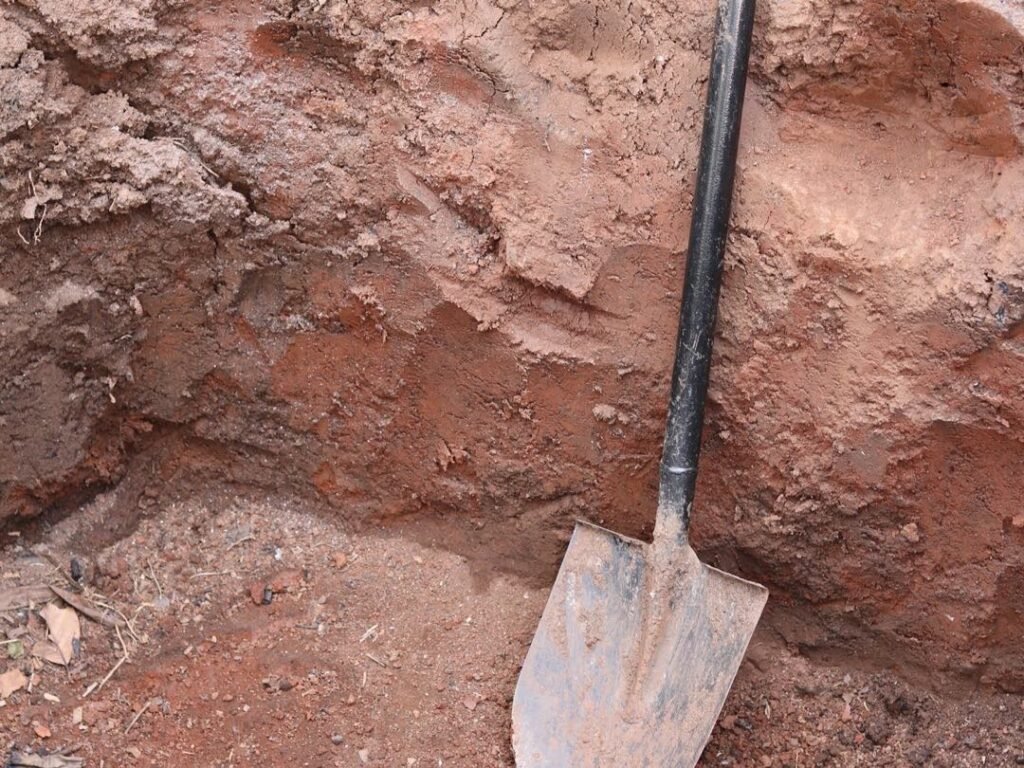
In Fort Collins, the property owner maintains and repairs the sewer service line from the home to the city’s main in the street, including resulting damage. If a blockage is between the house and the main, the owner pays for cleanup and repair, including street or driveway damage. If it is in the city’s main, the city clears it and pays for janitorial cleanup of the affected area. That is why the first call during a backup goes to Fort Collins Utilities at 970-221-6700 (customer service is 970-212-2900).
Loveland Water and Power maintains Loveland’s sewer mains, and customers are responsible for the connection up to the main. In Windsor, call Public Works at 970-674-2400. If several neighbors back up at once, the main is the likely cause. Our guide to who is responsible for the sewer line has the town-by-town rules.
Why the cause matters for insurance
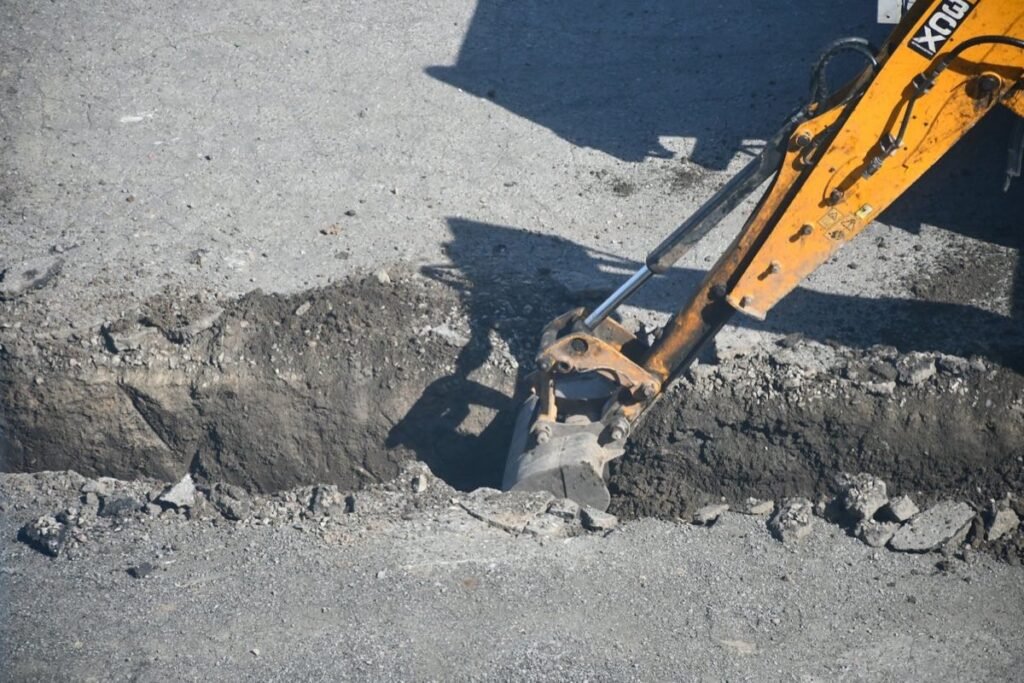
Claims often turn on what caused the failure. Homeowners policies usually exclude wear and tear, roots and age, and sewer backup damage usually needs a water backup endorsement. Sudden damage may be treated differently, depending on the policy. If someone else’s digging broke the line, their liability coverage may come into play. Build a record from the start:
- Photos and video of the damage, before cleanup
- The camera video and written summary showing what failed and where
- A written, itemized invoice that separates the pipe repair from cleanup and restoration
Call your insurer early. Our guide to homeowners insurance and sewer lines explains the endorsements.
Permits for emergency sewer work
In Fort Collins, clearing a stoppage and stopping a leak are exempt from a plumbing permit, so restoring flow does not wait on paperwork. Replacing concealed pipe is new work that needs a permit, at $65 plus sales tax on the project valuation. Other towns and sanitation districts set their own rules. Even in an emergency, digging starts with an 811 locate request so gas, electric and communication lines are marked.
Preventing the next emergency
- A camera inspection of an older line before it fails, and before a patio, driveway or landscaping goes over it.
- An outdoor cleanout, so a clog can be cleared and inspected without pulling a toilet.
- Root control. Scheduled cleaning keeps a rooty line flowing until the joints are lined or replaced.
- 811 before fence posts or sprinklers. Locators typically do not mark your private sewer line, so ask us to locate it first.
For the full range of repairs and costs, see our page on sewer line repair in Fort Collins.
Emergency sewer repair FAQ
What counts as an emergency sewer repair?
Sewage coming into the house or surfacing in the yard, a sinkhole or soft spot over the line, a line broken by digging, or a main line that clogs again right after clearing. A single slow drain can usually wait for a scheduled visit.
What are the signs of a collapsed sewer line?
Clogs that return soon after clearing, a cable that stops at the same spot, backups in the lowest drains, sewage odor outdoors and a soggy or sunken strip of lawn over the line. A camera inspection confirms it.
Why is sewage coming up in my yard?
Usually the line is blocked or broken downstream, and sewage is escaping through a break, a failed joint or the cleanout. Keep people and pets away, stop using water and call your utility to check the main, then call us.
Can a broken sewer line be fixed without digging?
Sometimes. Lining and pipe bursting renew cracked or broken pipe through small access points, but a collapsed section usually has to be dug out, and a liner cannot fix a sag.
Who pays for an emergency sewer repair in Fort Collins?
The owner, when the problem is in the service line between the house and the city main, including street or driveway damage. If the blockage is in the city’s main, Fort Collins Utilities clears it and pays for janitorial cleanup of the affected area.

Sewer or water line trouble?
Call to check availability for emergency sewer repair near you in Fort Collins, Loveland or Larimer County.
Camera inspection first, written and itemized quotes, and trenchless options where they fit.

Sewer and water line repair for Fort Collins, Loveland and Larimer County. Camera inspection first, written and itemized quotes, licensed sewer technicians.
Call (970) 999-1365