
Clay, Cast Iron, Orangeburg or PVC: What Your Sewer Pipe Is Made Of and How Long It Lasts
Clay, cast iron, Orangeburg or PVC? How to tell what your sewer pipe is made of, how long each typically lasts, and your repair options.
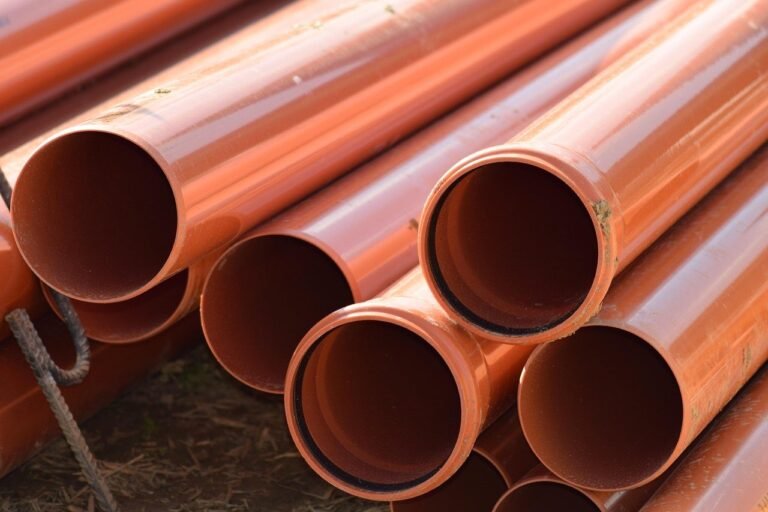
Most home sewer lines are made of one of six materials: vitrified clay, cast iron, Orangeburg fiber, ABS plastic, PVC (often the SDR-35 grade) or HDPE. Clay and cast iron are commonly estimated to last somewhere between 50 and 100 years, Orangeburg much less, and modern PVC and HDPE longer, but soil, roots and installation decide how any one line ages. The age of the house gives you a clue, and a camera inspection shows the material and its condition for certain.
Call (970) 999-1365 to find out what your sewer line is made of and how much life it has left.
Call nowWhat are the types of sewer pipes?
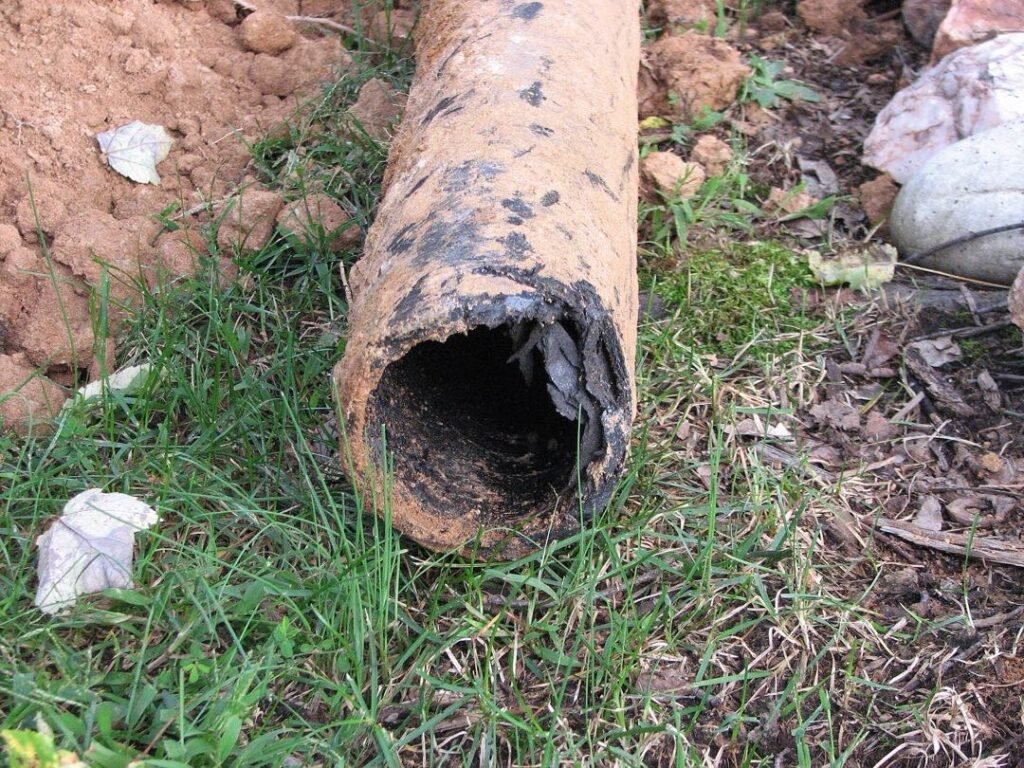
These are the materials you are likely to find between a Northern Colorado house and the main. The lifespans are commonly cited estimates, not promises: they assume reasonable soil and installation, and roots, settling or one bad joint can end a line decades early.
| Material | When it was common | How it typically fails | Commonly cited lifespan (typical estimate) |
|---|---|---|---|
| Vitrified clay | Older homes, before plastic pipe became standard | Roots at the joints, offset joints, cracks and breaks from soil movement | 50 to 100 years |
| Cast iron | Older homes, especially under and inside the house | Corrosion and scale from the inside, cracks, a thinning bottom on horizontal runs | 50 to 75 years |
| Orangeburg (bituminous fiber) | Roughly the 1940s to the early 1970s | Softens, blisters, flattens into an oval and collapses; roots | 30 to 50 years |
| ABS (black plastic) | Plastic-era homes, mostly drains inside the house | Joint failures, cracks from settling or impact | 50 to 80 years |
| PVC SDR-35 (usually green) | The standard for new sewer lines | Rarely the pipe itself; bellies, separated joints, damage from digging | 100 years or more |
| HDPE (black, fused joints) | Modern replacements, especially pipe bursting | Few weak points; poor bedding can still cause sags | 50 to 100 years |
How long do clay sewer pipes last?
Vitrified clay is fired clay pipe, laid in short sections joined at bell-and-spigot joints. The pipe body resists corrosion and household chemicals, which is why clay is commonly cited at 50 to 100 years.
The joints are the weak point. Older clay joints admit roots, and soil movement can offset them, so many clay lines need repair long before the pipe itself wears out. A clay line under a big street tree can fail at one joint while the rest of the pipe is still sound. How roots get into sewer lines.
How long do cast iron sewer pipes last?
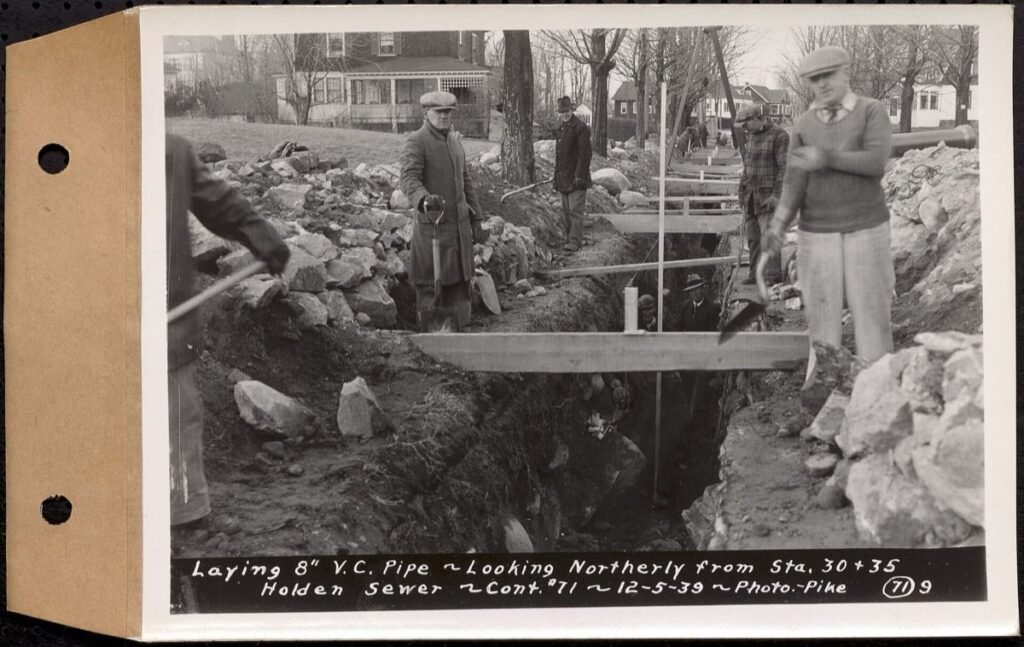
Cast iron is heavy and strong, and it was a standard choice for drain lines in older homes, often running under the basement slab and out through the foundation. It is commonly cited at 50 to 75 years.
Cast iron corrodes and scales from the inside. Rough buildup narrows the pipe and snags paper and waste, and the bottom of a horizontal run can wear thin or crack while the top still looks fine.
What is Orangeburg pipe?
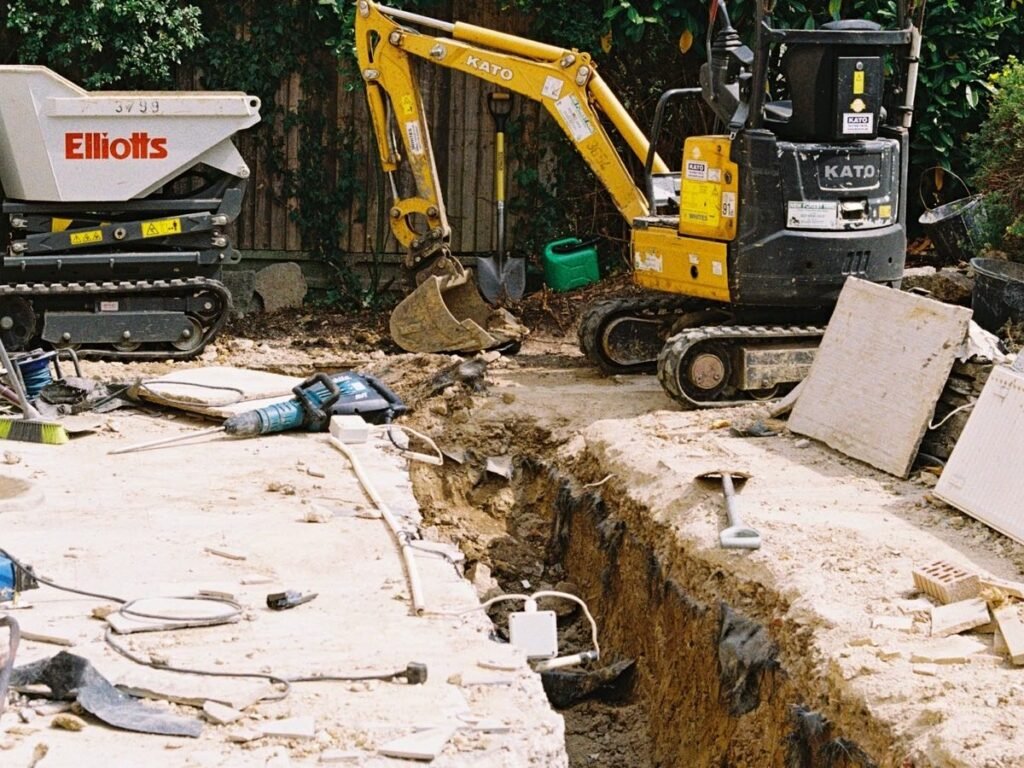
Orangeburg is bituminous fiber pipe: layers of wood fiber bound together and soaked in coal tar pitch. It was cheap and light, and it was commonly installed from the 1940s to the early 1970s. Its commonly cited lifespan is about 30 to 50 years, so any Orangeburg still in the ground has already outlived that estimate.
Under the weight of the soil, fiber pipe softens, blisters and flattens into an oval until it collapses, and roots push through the softened walls. That is why Orangeburg pipe replacement is usually a question of when, not whether.
How to identify Orangeburg pipe
- Color and surface: dull black or dark brown, with a layered or fibrous look. ABS is also black, but it is glossy, hard and perfectly round.
- Shape: oval, dented or blistered wherever you can see it.
- House age: a home built roughly from the 1940s to the early 1970s, often with cast iron near the foundation and fiber pipe beyond it in the yard.
- On camera: a dark, layered wall, often deformed, sometimes with roots pushing through.
Because Orangeburg is usually buried outside, you rarely see it without a camera.
PVC, ABS and HDPE: the plastic pipes
PVC became the standard for new sewer lines, often the green SDR-35 grade for the run to the main. It does not corrode, and sound joints give roots few ways in. ABS, a black plastic, is common for drains inside homes and in some building sewers. HDPE is a flexible black plastic joined by heat fusion, and it is the pipe pulled in during pipe bursting.
When plastic lines fail, the cause is usually installation or ground movement rather than the pipe: a belly from settled backfill, a separated joint, or a hit from a fence post or sprinkler install.
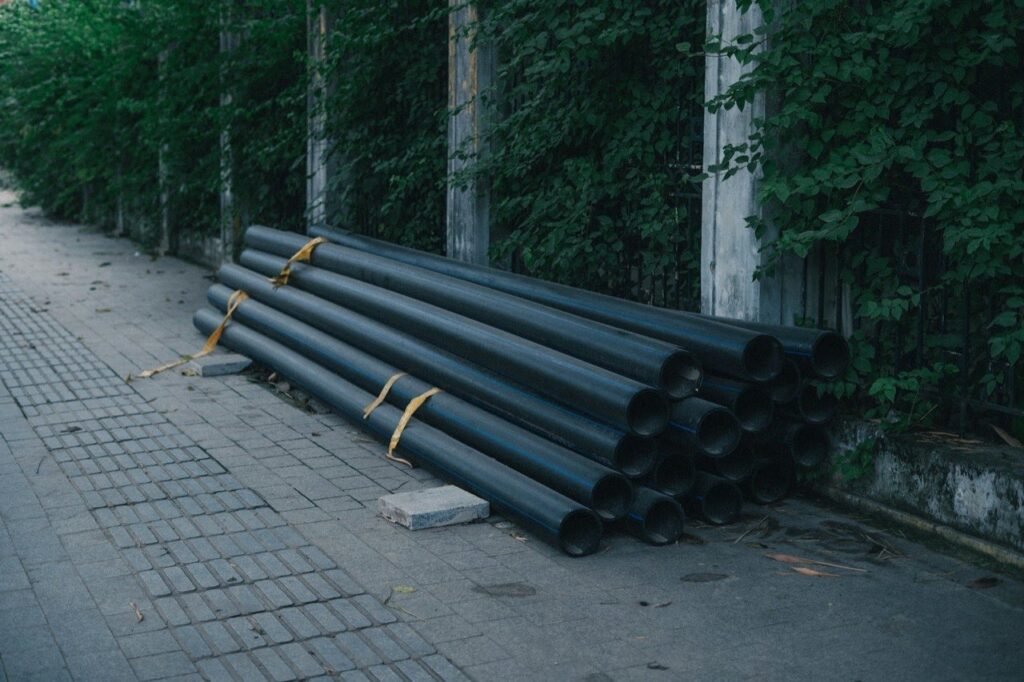
How to tell what your sewer pipe is made of
Start with the age of the house
About 31% of Fort Collins homes were built before 1980 and 9% before 1960. In Loveland the figures are 34% and 11% (U.S. Census Bureau, ACS 2024 5-year estimates). Homes from those eras are the most likely to still have original clay, cast iron or Orangeburg lines, and a house built from the 1940s to the early 1970s sits in the Orangeburg window. Newer homes, including the 17% of Fort Collins homes and 18% of Loveland homes built in 2010 or later, usually have plastic. Age is a clue, not proof, because many older lines have been partly or fully replaced.
Look at the cleanout and the basement
The cleanout is a capped pipe near the foundation, in the basement floor or near the property line. What you see there is a useful hint:
- White or green plastic: PVC.
- Glossy black plastic: ABS, or HDPE on a replaced line.
- Heavy dark metal, often rusty, with a wide bell at each joint: cast iron.
- Reddish-brown or tan ceramic: clay.
- Dull black, layered and misshapen: possibly Orangeburg.
A new plastic cleanout can sit on an old line, so the riser only tells you about the riser. Open a cleanout slowly, and never while drains are backed up, because sewage can spill out under pressure. Sewer gas is unpleasant and can be hazardous, so keep flames away and put the cap back tightly.
Confirm with a camera inspection
A camera shows the material along the whole run and every change in it. One line can be cast iron under the house, clay or Orangeburg in the yard and PVC where someone made a repair. The video also shows what decides the fix: roots, cracks, offsets, sags, scale or deformation. National cost guides put a camera inspection at about $100 to $500 (This Old House, 2026). Sewer camera inspection.
Replacement options by pipe material
- Clay. If the pipe is still round and continuous, sewer pipe lining seals the joints roots get through. If it is cracked and broken along a straight run, pipe bursting breaks the brittle clay outward and pulls new HDPE in behind it. Sags and collapsed sections need excavation.
- Cast iron. Lining can work once the scale is cleaned out, as long as the walls are still sound. Badly thinned or broken cast iron is replaced by bursting or excavation.
- Orangeburg. Usually needs replacement. It is often too deformed and soft to line, and aggressive cleaning can tear it. It is replaced by bursting where the head can pass, and by excavation where a section has collapsed.
- PVC, ABS and HDPE. Usually a spot repair: re-laying a belly, fixing a separated joint or replacing a damaged length.
Replacing a cast iron sewer line usually means switching to plastic. This Old House lists material costs of about $800 to $3,000 for cast iron, against $120 to $320 for PVC and $120 to $440 for ABS. Nationally, excavated replacement runs about $50 to $200 per foot and trenchless methods about $60 to $250 per foot, with an average job around $3,320 and most homeowners paying $1,390 to $5,320 (This Old House, 2026, based on Angi data). Our sewer line replacement page covers each option, and trenchless vs. traditional sewer replacement compares the methods side by side.
Older neighborhoods: Old Town Fort Collins and downtown Loveland
The oldest homes in our area sit in and around Old Town Fort Collins and downtown Loveland, under mature street trees. Original lines there are often clay or cast iron, and roots in clay joints are the classic problem. Mid-century neighborhoods such as Campus West may have cast iron or Orangeburg.
In these blocks, lining is often worth pricing because it seals joints without digging under old trees and sidewalks, while Orangeburg usually has to be replaced. If you are buying an older home, have the sewer scoped during the inspection period. Every job is done by licensed sewer technicians and covered by liability insurance, and we pull the permits, request the 811 locates and schedule the inspections. For more on causes, methods and costs, see our guide to sewer line repair in Fort Collins.
Sewer pipe materials FAQ
How long do clay sewer pipes last?
Clay pipe is commonly cited at 50 to 100 years, but that is a typical estimate. Roots and shifting joints often cause trouble sooner, so a camera inspection is the way to judge a specific line.
How long do cast iron sewer pipes last?
Cast iron is commonly cited at 50 to 75 years, depending on soil, use and installation. It corrodes from the inside, so its condition matters more than its age.
What is Orangeburg pipe?
Orangeburg is bituminous fiber pipe made of wood fiber and coal tar pitch, commonly installed from the 1940s to the early 1970s. It softens, deforms and collapses with age.
How do I know if I have Orangeburg pipe?
Suspect it in a house built from the 1940s to the early 1970s. It is dull black, layered and often out of round, but because it is usually buried outside, a camera inspection is the reliable way to confirm it.
Does Orangeburg pipe need to be replaced?
Usually, yes. It is often too deformed to line, so it is replaced by pipe bursting or excavation, ideally before it collapses and causes a backup.
Keep reading
Related guides
Sewer Line Belly: What It Is, Signs, and How It's Fixed
A sewer line belly is a sag where water and waste sit. Learn the signs, why lining cannot fix it, and when a sag needs digging up and re-laying.
Read guide
Who Is Responsible for the Sewer Line: You or the City?
In Fort Collins, Loveland and nearby towns, the owner usually maintains the sewer line up to the main. Town-by-town rules, backups and permits.
Read guide
Frozen Water Line? How Deep Lines Are Buried in Northern Colorado and How to Thaw Them Safely
Thaw a frozen pipe safely: open the faucet, use gentle heat, never a flame. Plus burial depths, the frost line and when to call for help.
Read guideSewer or water line trouble?
Call for a camera inspection that shows what your sewer line is made of.
Camera inspection first, written and itemized quotes, and trenchless options where they fit.

Sewer and water line repair for Fort Collins, Loveland and Larimer County. Camera inspection first, written and itemized quotes, licensed sewer technicians.
Call (970) 999-1365