
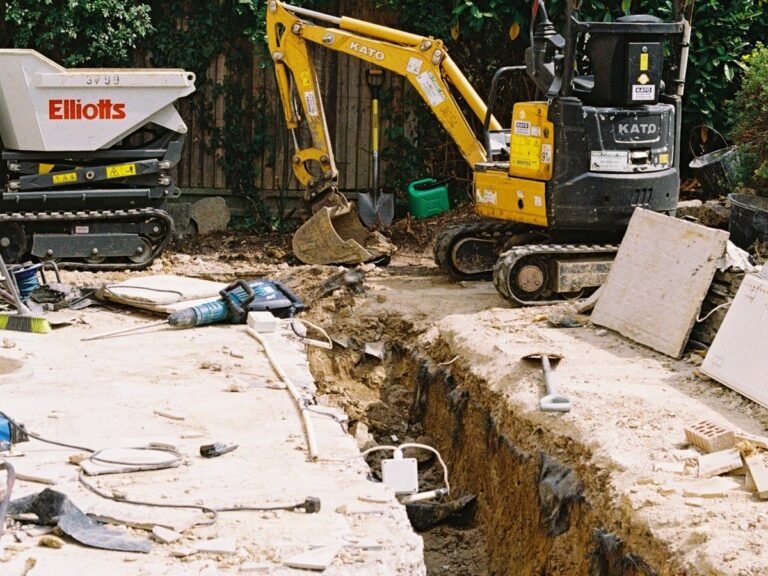
Trenchless vs Traditional Sewer Line Replacement: Cost, Pros and Cons
Trenchless vs traditional sewer line replacement: per-foot costs, restoration, when trenchless won't work, and how to choose in Fort Collins.
Per foot, trenchless sewer line replacement usually costs the same as traditional open-trench replacement or more: This Old House’s 2026 cost guide, based on Angi data, puts trenchless work at $60 to $250 per foot and excavation at $50 to $200 per foot. Trenchless often costs less in total when a driveway, mature trees, finished landscaping or the street sits over the line, because there is far less to tear out and rebuild. It cannot fix a collapsed pipe, a deep belly or a line with the wrong slope, so a camera inspection decides which methods are possible before price comes into it.
Call (970) 999-1365 to book a camera inspection and find out which methods your line allows.
Call nowTrenchless vs traditional sewer line replacement at a glance
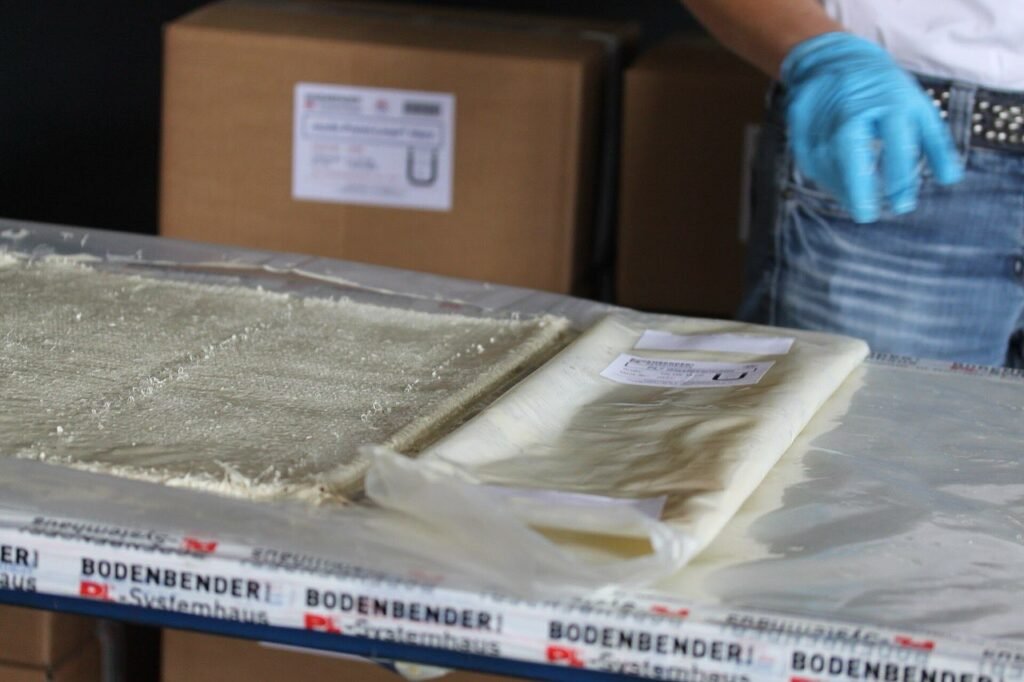
Traditional replacement digs a trench along the line and lays new pipe. Trenchless replacement works through the old pipe, by lining it or by bursting it and pulling new pipe in behind.
| Trenchless (lining or bursting) | Traditional (open trench) | |
|---|---|---|
| How it works | A resin liner is cured inside the old pipe (CIPP), or a bursting head pulls new HDPE pipe through it | The line is dug up and replaced, usually with new PVC |
| Digging | The cleanout, or a small access pit at each end | A trench along the damaged run, from the house toward the main |
| Cost per foot (This Old House, 2026) | $60 to $250 | $50 to $200 |
| Restoration | Usually limited to the access pits | Lawn, sprinklers, concrete, trees and sometimes the street along the trench |
| Typical disruption | Smaller work area and usually a shorter job | Open trench, dirt piles and equipment in the yard; usually a longer job |
| When it fits | Pipe that still holds its shape, at a workable slope, under something expensive to rebuild | Collapsed pipe, bellies, wrong slope, re-routing or added connections, or a short run under open lawn |
Neither column wins on every property: the right method depends on your pipe’s condition and what sits on top of it. Read more on how trenchless sewer repair works.
Is trenchless sewer repair cheaper?
Sometimes, but not because the pipe work costs less. The savings, when they happen, come from everything a trench destroys and someone has to rebuild.
That is why the per-foot price can mislead. The open-trench figure often covers digging, pipe and backfill, but not what sits on top of the line:
- Driveways, patios and sidewalks. Concrete has to be saw-cut, hauled away and poured again.
- Landscaping and sprinklers. Beds, sod and irrigation lines in the trench path come out.
- Mature trees. A trench through the root zone can badly damage a tree you cannot replace quickly.
- Street cuts. When the connection to the main is under the road, opening the street typically adds right-of-way permits, traffic control and pavement patching.
Labor and digging add up too. This Old House lists sewer labor at about $150 to $500 per hour and excavation at about $400 to $1,200 or more, and permits nationally at about $100 to $1,000.
In Fort Collins, your line runs to the city main in the street, and for a blockage between the house and the main, Fort Collins Utilities says the owner pays for cleanup and repair, including street or driveway damage.
So compare totals, not per-foot prices: a short run under open lawn is often cheaper to dig, while a long run under a driveway and a mature tree often favors trenchless. More in our sewer line replacement cost guide.
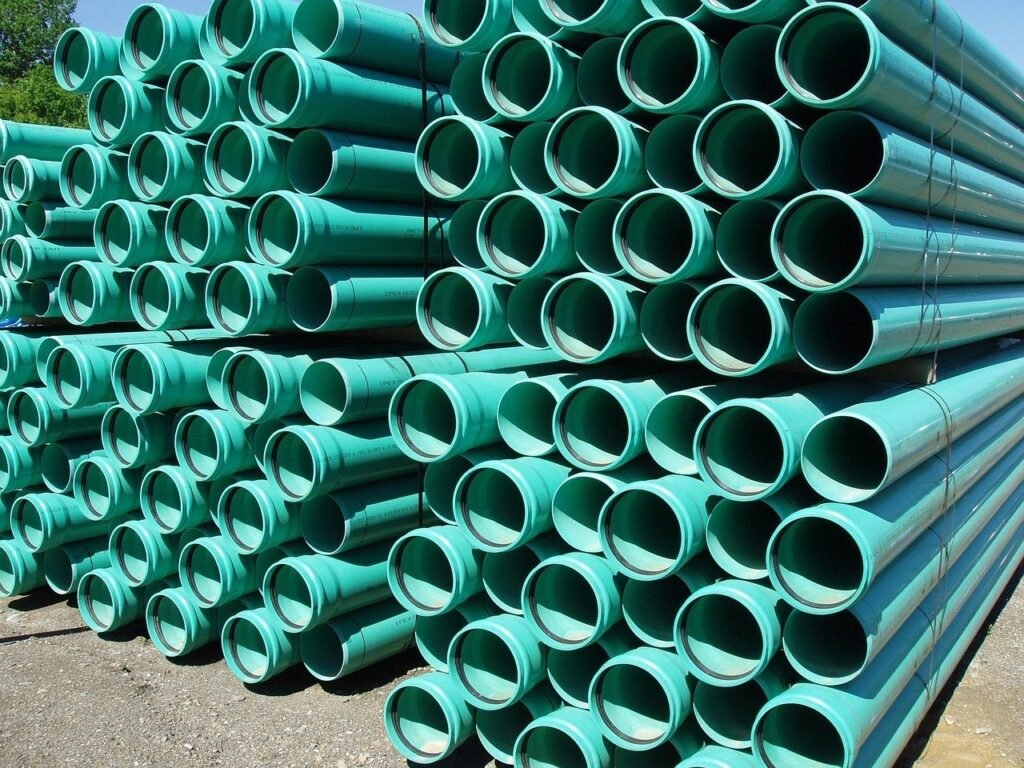
Pros and cons of trenchless and open trench replacement
Trenchless pros and cons
Pros:
- Little digging: often just the cleanout, or a small pit at each end.
- Driveways, trees and landscaping usually stay in place.
- A smaller work area and usually a shorter job.
- Lined pipe has no joints and burst-in HDPE is fused into one length, so roots have no way in.
Cons:
- Often costs more per foot.
- Cannot correct a belly or the wrong slope, because the new pipe follows the old one’s path.
- Will not pass through a collapsed section.
- Lining slightly reduces the pipe’s inside diameter.
Open trench pros and cons
Open-trench replacement fixes almost anything, including collapse, bellies, wrong slope and re-routing, because the whole pipe is exposed. It is often cheaper per foot on short runs under lawn, and the new pipe, commonly PVC SDR-35, is laid at the correct slope. The trade-offs are the most digging and restoration, a longer job and, at the street, right-of-way permits and pavement work.
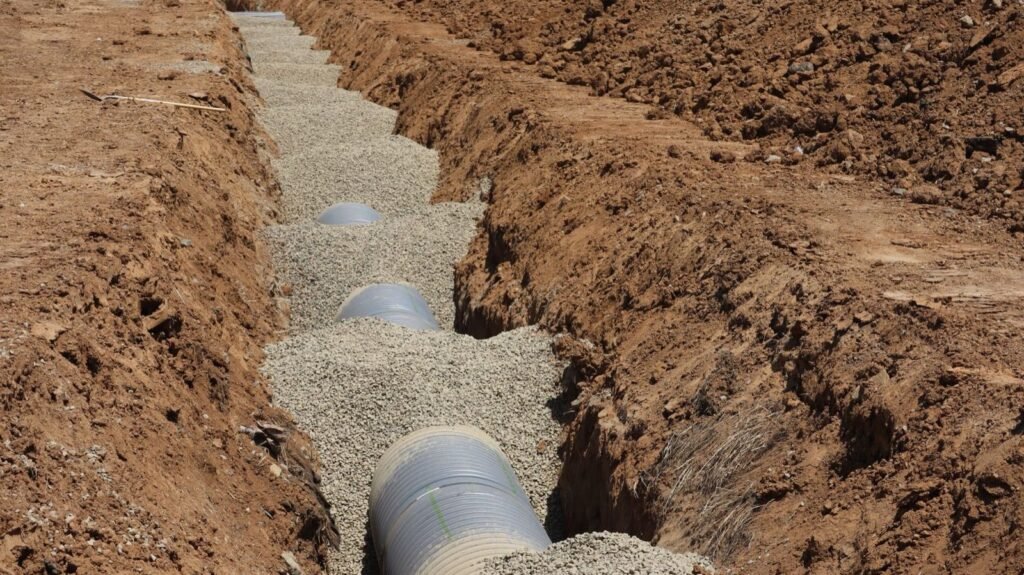
When trenchless will not work
Trenchless methods need a pipe they can get through and a route that already drains. They are usually ruled out where the camera shows:
- A collapsed pipe. If a section has caved in, a liner has nothing to form against and a bursting head may not get through.
- Deep bellies. A liner follows the old pipe, so a sag stays a sag and keeps holding waste, and bursting tends to follow the old path too. More on sewer line bellies.
- The wrong slope. If the line was laid too flat or has settled out of grade, only re-laying it corrects the fall.
- Connections that need fixing. A broken connection at the main, a re-route or a new branch line usually needs an open hole at that spot.
- Badly offset joints or sharp bends, which can stop a liner or a bursting head.
Many lines get a mix: a spot repair or short open-trench section where the line sagged or collapsed, and lining for the rest. Compare sewer line replacement options.
Pipe bursting vs pipe lining
The two trenchless methods do different jobs.
Pipe lining (CIPP) puts a resin-soaked liner inside the cleaned pipe and cures it into a new, jointless pipe within the old one. It suits clay or cast iron pipe that is cracked, leaking or rooty but still round, and it often needs only the cleanout. A short point liner can seal a single bad joint. Learn more about sewer pipe lining.
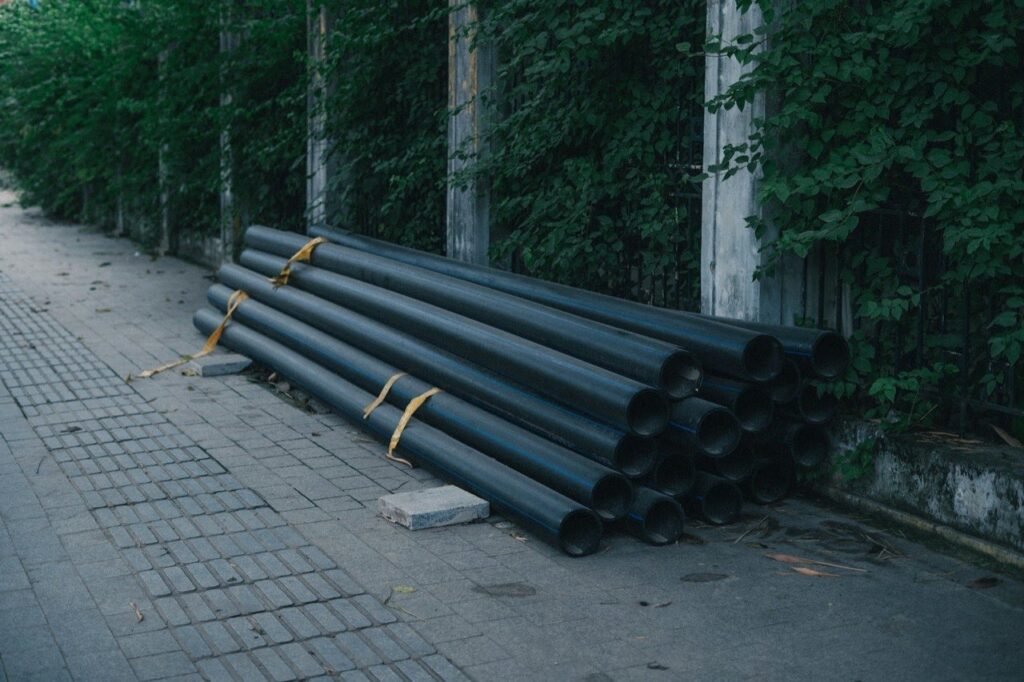
Pipe bursting pulls a cone-shaped head through the old line, breaking it outward while new HDPE pipe follows behind. It replaces the pipe entirely, at the same size or slightly larger, and needs a pit at each end. It suits pipe too broken or deformed to line, such as failing Orangeburg fiber pipe, as long as the head can pass. Learn more about pipe bursting.
What changes the choice in Fort Collins and Loveland
Older pipe. About 31% of Fort Collins homes and 34% of Loveland homes were built before 1980, including 9% and 11% before 1960 (U.S. Census Bureau, ACS 2024 5-year estimates). Many still have vitrified clay, cast iron or Orangeburg fiber sewer lines. Clay joints admit roots, cast iron scales from the inside, and fiber pipe deforms with age. Rooty clay that holds its shape often lines well; crushed fiber pipe usually needs bursting or digging. Compare how long each sewer pipe material lasts.
Mature trees. Established neighborhoods in both cities have large street and yard trees growing over old service lines. The roots break into joints, and the same trees make a trench costly and risky for the tree. That combination is where trenchless methods tend to pay off.
Expansive soil. The Colorado Geological Survey calls expansive soil Colorado’s most significant geologic hazard and lists damage to sewer lines. Swelling and shrinking clay can sag a line into a belly, which favors digging that section.
Permits. In Fort Collins, replacing concealed pipe is new work that needs a plumbing permit: $65 plus sales tax on the project valuation. Clearing a stoppage is exempt. Homeowners doing their own work file a homeowner affidavit and should call 811 before digging so buried utility lines are marked. Loveland and the other towns and districts set their own rules. More on sewer line repair in Fort Collins.
How to decide between trenchless and traditional replacement
- Start with a camera inspection. A camera with a locator shows the pipe material, defects, sags and depth, and lets us mark the route on the ground. This Old House puts it at about $100 to $500. Ask for the video.
- Ask which methods will work. If the camera shows a belly, a collapse or the wrong slope, at least that section needs digging. If the pipe still holds its shape, ask for trenchless and open-trench prices side by side.
- Get a written, itemized quote. It should list the method, the length, the pipe material, the access pits or trench, each restoration item, the permits and fees, and a final camera run.
- Compare totals. Add restoration to the open-trench price before comparing it with trenchless.
- Check the paperwork. On our jobs, we pull the permits, request the 811 locates and schedule the inspections.
Every job is done by licensed sewer technicians and covered by liability insurance, and every quote we give follows a camera inspection.
Trenchless vs traditional sewer replacement FAQ
Is trenchless sewer repair cheaper than traditional replacement?
Not per foot: This Old House puts trenchless at $60 to $250 per foot and excavation at $50 to $200. It is often cheaper in total when a driveway, mature trees, landscaping or the street would otherwise be torn out and rebuilt.
How much does trenchless sewer line replacement cost?
This Old House’s 2026 guide, based on Angi data, puts it at about $60 to $250 per foot. Length, depth, access pits and permits move the final price, so get a written quote after a camera inspection.
What are the pros and cons of trenchless sewer repair?
It needs little digging and usually leaves driveways, trees and landscaping in place. It often costs more per foot and cannot fix a collapsed pipe, a deep belly or the wrong slope.
Does trenchless mean no digging at all?
Not always. Lining can often be done through the cleanout, but bursting needs a pit at each end, and a broken connection at the main may need its own hole.
Do I need a permit to replace a sewer line in Fort Collins?
Yes. Replacing concealed pipe is new work under a City of Fort Collins plumbing permit, which costs $65 plus sales tax on the project valuation. We pull the permits for the work we do.
Keep reading
Related guides

Does Homeowners Insurance Cover Sewer Line Replacement or a Sewer Backup?
Usually not for a worn-out pipe. What standard policies exclude, what water backup and service line endorsements cover, and how to support a claim.
Read guide
Frozen Water Line? How Deep Lines Are Buried in Northern Colorado and How to Thaw Them Safely
Thaw a frozen pipe safely: open the faucet, use gentle heat, never a flame. Plus burial depths, the frost line and when to call for help.
Read guide
How to Clear a Main Sewer Line Clog (and When to Call a Pro)
Signs the clog is in your main sewer line, how to open the cleanout and snake it safely, what not to pour down it, and when to call a pro.
Read guideSewer or water line trouble?
Call for a camera inspection and a written quote that prices each workable method.
Camera inspection first, written and itemized quotes, and trenchless options where they fit.

Sewer and water line repair for Fort Collins, Loveland and Larimer County. Camera inspection first, written and itemized quotes, licensed sewer technicians.
Call (970) 999-1365