
Frozen Water Line? How Deep Lines Are Buried in Northern Colorado and How to Thaw Them Safely
Thaw a frozen pipe safely: open the faucet, use gentle heat, never a flame. Plus burial depths, the frost line and when to call for help.
To unfreeze a water line you can reach, open the faucet it feeds, then warm the frozen section gently with a hair dryer, a heating pad or a heat cable, starting near the faucet and working back toward the ice. Never use an open flame, and if the pipe has split, shut off the main water valve before it thaws. A service line frozen underground, between the street and the house, needs professional equipment, so call us rather than digging.
Call (970) 999-1365 if you have no water, a burst pipe or a wet spot in the yard.
Call nowHow to unfreeze water lines inside the house
These steps are for pipes you can see and reach: in a basement, a crawlspace, a garage or under a sink.
- Find the frozen section. Pipes on exterior walls, in crawlspaces and garages, and under sinks on outside walls freeze first. Frost on the pipe, a bulge, or a faucet that only trickles helps narrow it down.
- Open the faucet. Open both the hot and cold sides of the faucet the pipe feeds, so melting ice has somewhere to go and pressure can escape.
- Apply gentle heat. Use a hair dryer, an electric heating pad, towels soaked in hot water, a space heater kept well away from anything flammable, or a heat cable rated for pipes and installed according to its instructions. Start near the faucet and work back toward the frozen spot.
- Keep electricity away from water. Keep cords and dryers out of puddles, use a GFCI-protected outlet where you can, and never leave a space heater unattended.
- Keep going until full pressure returns, then check every other faucet. If one pipe froze, others may have too.
- If the pipe bursts, shut off the water. Close the main shut-off valve, usually where the water line enters the house, and open a faucet to relieve the pressure. Then call us.
What not to do. Never use a torch, a propane or kerosene heater, a charcoal grill or any other open flame. Flames can start a fire inside a wall or floor and damage the pipe, and fuel-burning heaters in a closed crawlspace can build up carbon monoxide.
A frozen underground water line needs professional help
If no faucet in the house has water during a cold snap, the freeze is probably in the buried service line rather than an indoor pipe. Lines tend to freeze where they run shallow, under a driveway or walk where cleared snow lets frost reach deeper, or where they rise through the foundation into the house.
Do not try to dig down to it. Frozen ground is hard, slow work, other utilities may be buried nearby, and any digging should start with a call to 811. Thawing a buried line takes specialized equipment, and once water flows again, the line needs checking, because ice can split a pipe and the leak often shows only after it thaws. If the line is old galvanized steel or polybutylene, or it has frozen before, replacing it with new pipe at the proper depth may be worth considering. Water line repair and replacement.

How deep are water lines buried?
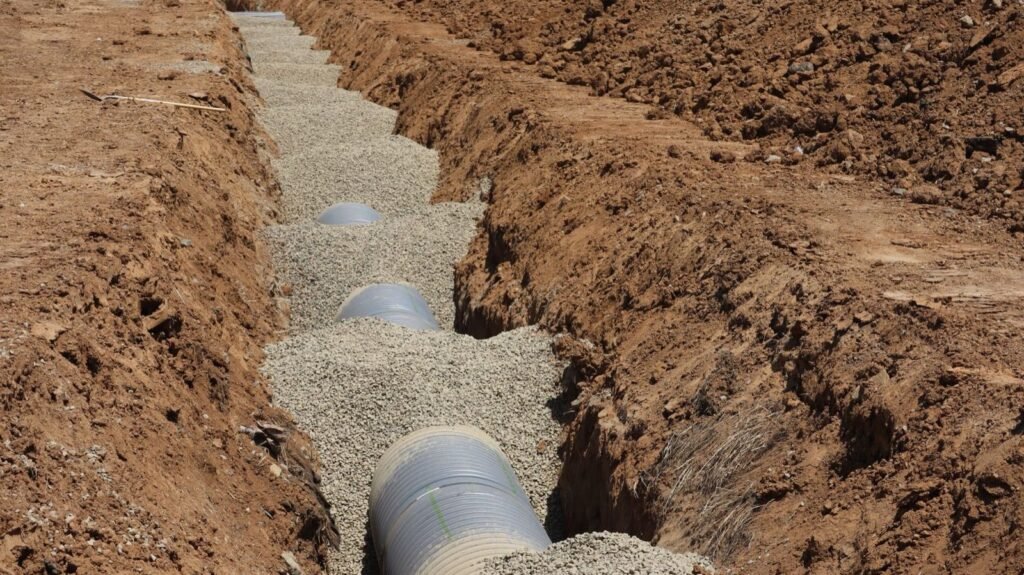
Deep enough to stay below the frost line, the depth to which winter freezes the ground. There is no single number for every property: building codes and the water utility set the required burial depth for a water service line, and in cold climates that depth puts the pipe below the frost line.
For reference, Larimer County requires foundations to have at least 30 inches of frost protection below grade. That figure is for foundations, not pipes. Water providers set their own cover requirements for service lines, and they can be deeper, so ask your water utility for the required depth rather than borrowing the foundation number.
Older lines do not always meet today’s rules. A line laid shallow, one under a driveway where frost goes deeper, or one where regrading or landscaping removed soil from above is more likely to freeze.
How deep to bury a water line
If you are installing or replacing a line, get the required depth from your water provider and the building department, and confirm it as part of the permit. In Fort Collins, replacing concealed pipe is new work that needs a plumbing permit, which costs $65 plus sales tax on the project valuation, and homeowners doing their own work file a homeowner affidavit. Call 811 before you dig.
How deep are sewer lines buried?
A sewer service line has no single depth either. It has to slope downhill from where the drain leaves the house to the main, which is usually under the street, so its depth depends on how deep the house drain exits, how deep the main is and the lay of the land. It often changes along the run.
The surest way to learn how deep your sewer line is: a camera inspection with a locator, which reads the depth at points along the line and marks them on the ground. Our guide to finding your sewer cleanout and sewer line explains how the line usually runs.
Can sewer lines freeze?
It is uncommon. Wastewater is usually warmer than the surrounding ground, it flows in bursts that drain away, and building sewers are buried. Sewer pipes can still freeze when:
- The line is shallow, or runs through an unheated crawlspace or another exposed spot.
- Flow is low. A slow, steady trickle can freeze bit by bit in a cold section.
- The home is vacant with the heat off or turned way down, so nothing warm moves through the line.
- Water sits in a belly, a low spot where water stays put and can freeze solid.
The signs are drains that slow down or back up during a deep cold spell, often with gurgling. Do not pour chemical drain openers into a frozen or blocked line: they can sit in the pipe and splash back, and they should never be mixed. If sewage is backing up, stop running water and see emergency sewer repair. Active sewage backups are scheduled first. For more on sewer problems in general, see our guide to sewer line repair in Fort Collins.
How to keep water lines from freezing
- Drip faucets during a cold snap, especially those on exterior walls, and open the cabinet doors under sinks on outside walls.
- Insulate exposed pipe in crawlspaces, garages and attics with foam pipe insulation, or add a heat cable rated for pipes.
- Keep crawlspaces warm. Seal drafts near pipes, and close crawlspace vents for the winter if your home has them.
- Blow out the sprinkler system before hard freezes arrive.
- Disconnect garden hoses so outdoor faucets can drain. A frost-free faucet can still split if a hose holds water in it.
- Keep the heat on when you travel, and consider shutting off and draining the water in a home that will sit empty.
When to call
- No water anywhere in the house.
- A suspected burst: spraying water, a ceiling stain, water in the crawlspace or a sudden drop in pressure.
- A wet spot in the yard between the curb and the house, or a meter that keeps moving with every fixture off.
- Drains backing up during a cold spell.
Every job is done by licensed sewer technicians and covered by liability insurance, and we pull the permits, request the 811 locates and schedule the inspections.
Frozen water lines in Fort Collins: who does what
Fort Collins Utilities maintains the water main up to the curb stop, the curb stop itself and the meter. The property owner is responsible for the service line from the curb stop to the house, any damage it causes and the plumbing inside.
Only Utilities staff may operate the curb stop, the shut-off valve near the property line, so do not try to turn it yourself. If the leak is on the street side of your house valve, or the water needs to be shut off at the curb, call Fort Collins Utilities customer service at 970-212-2900. Fort Collins utility rules and permits.
Frozen water line FAQ
How do you unfreeze a water line?
Open the faucet the pipe feeds, then warm the frozen section gently with a hair dryer, heating pad or pipe heat cable, working from the faucet back toward the ice. Never use an open flame, and shut off the main valve if the pipe has burst.
How deep are water lines buried in Northern Colorado?
Below the frost line, at the depth your water utility and building code require. Larimer County requires at least 30 inches of frost protection for foundations, but service line requirements are set separately, so ask your utility.
How deep are sewer lines buried?
It varies. A sewer line slopes downhill from the house to the main, so its depth depends on the house drain, the main and the terrain. A camera with a locator can measure the depth of your line.
Can sewer pipes freeze?
Yes, though it is uncommon. Shallow lines, low flow, vacant homes and water sitting in a belly are the usual risks.
Who fixes a frozen water line in Fort Collins?
The owner is responsible for the service line from the curb stop to the house. Fort Collins Utilities maintains the main, the curb stop and the meter, and only Utilities staff may operate the curb stop.
Keep reading
Related guides

Does Homeowners Insurance Cover Sewer Line Replacement or a Sewer Backup?
Usually not for a worn-out pipe. What standard policies exclude, what water backup and service line endorsements cover, and how to support a claim.
Read guide
How to Clear a Main Sewer Line Clog (and When to Call a Pro)
Signs the clog is in your main sewer line, how to open the cleanout and snake it safely, what not to pour down it, and when to call a pro.
Read guide
How to Find Your Sewer Cleanout, Sewer Line and Water Line (Before You Dig)
Where to look for a sewer cleanout, what it looks like, how to trace a buried sewer or water line, and why 811 may not mark your private lines.
Read guideSewer or water line trouble?
Call for help with a frozen, leaking or burst water line.
Camera inspection first, written and itemized quotes, and trenchless options where they fit.

Sewer and water line repair for Fort Collins, Loveland and Larimer County. Camera inspection first, written and itemized quotes, licensed sewer technicians.
Call (970) 999-1365